 Case study · Rolebranch
How I built Rolebranch
Designed, built and run by me·September to October 2026
Rolebranch is a CV workspace I designed, built and run on my own: a web app, a public site in six languages and a connector that lets ChatGPT, Claude and Le Chat work with your CV. I had the idea for a couple of months and kept putting it off, sure nobody would use it. On 26 September 2026 I finally started, and a month later it is live at rolebranch.com as a free beta.
- 1 month
- first commit to public beta
- 6
- languages, interface to emails
- 16
- tools in the MCP connector
- 4,400+
- tests before every change
01
The problem
Applying for a job well means rewriting your CV for each posting. Most people send the same CV everywhere, because tailoring it by hand takes an hour. AI tools make it fast, but they invent numbers and skills, and you only notice in the interview.
In Europe there is a second problem. Most CV tools are American. They don’t know that a German employer expects a photo and a letter laid out to DIN 5008, or that a French CV fits on one page. I am a developer from Ukraine working in Germany, so I had both problems myself.
02
What it does
One master CV, a tailored copy per job.
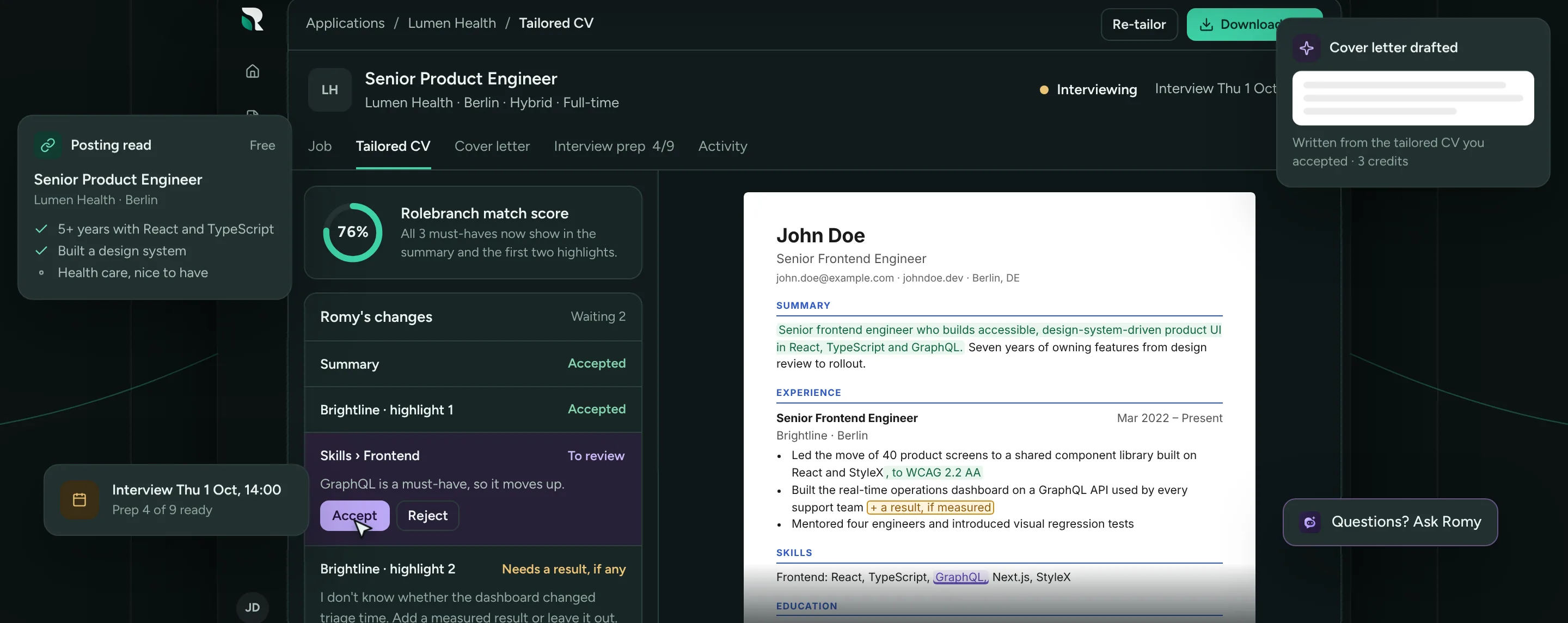
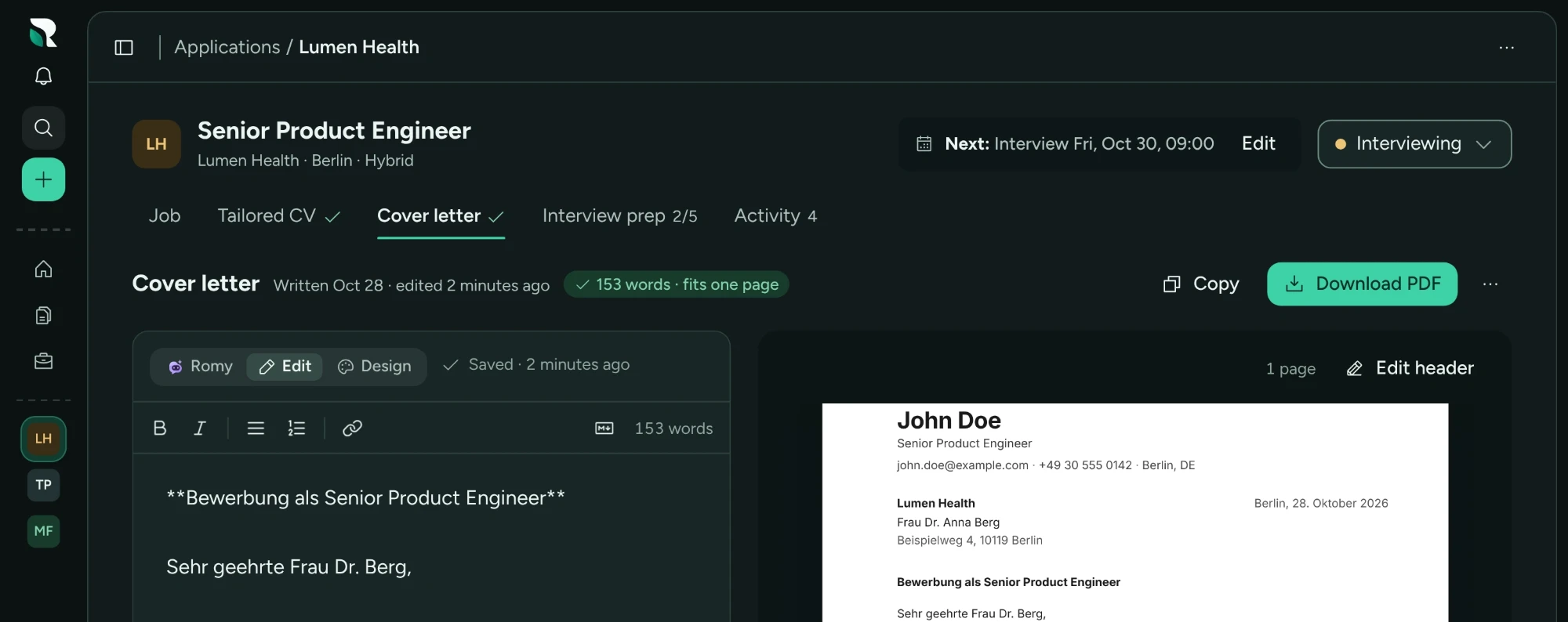
Paste a posting and Romy, the AI assistant, drafts a tailored CV and cover letter.
Nothing changes without you.
Every edit is a suggestion you accept or reject, and every version can be restored.
No invented facts.
Where a result needs a number Romy doesn’t have, she leaves a blank for you to fill.
European conventions built in.
German letters to DIN 5008, French letter heads, a photo hint per country, six interface languages.
The rest of the search.
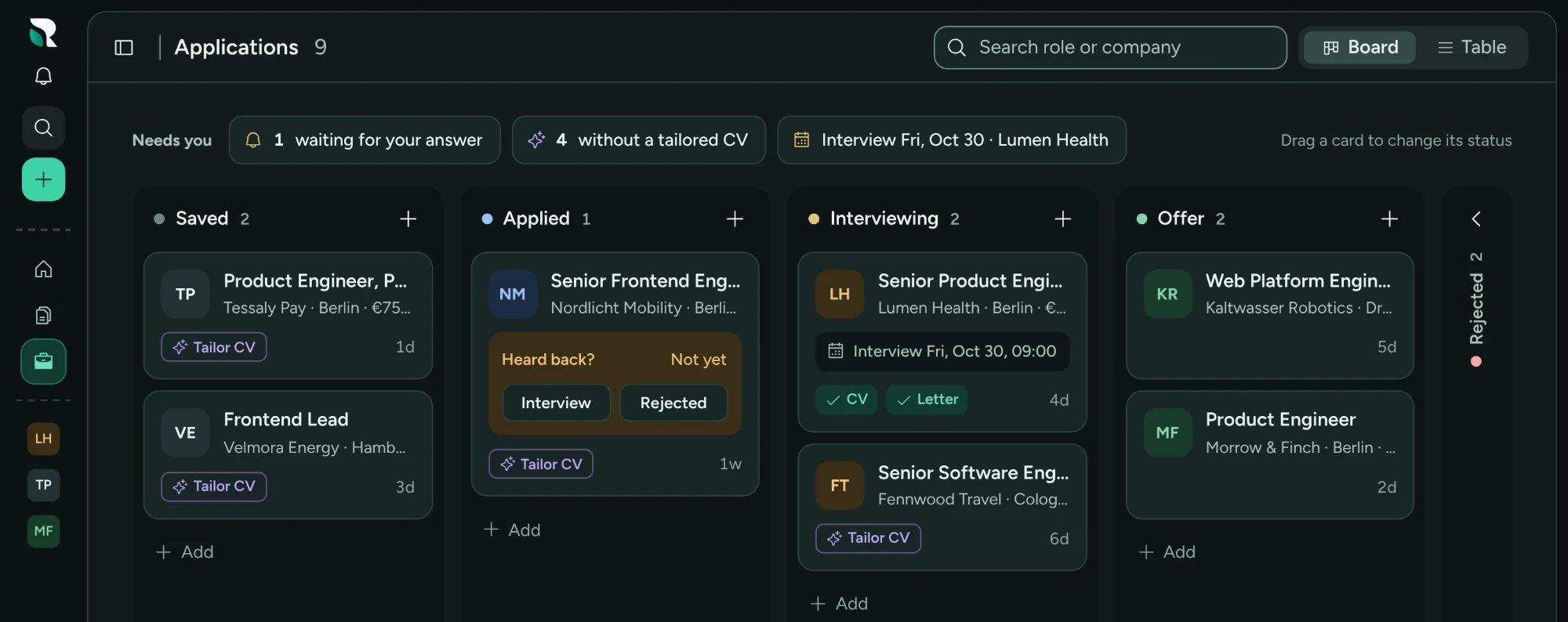
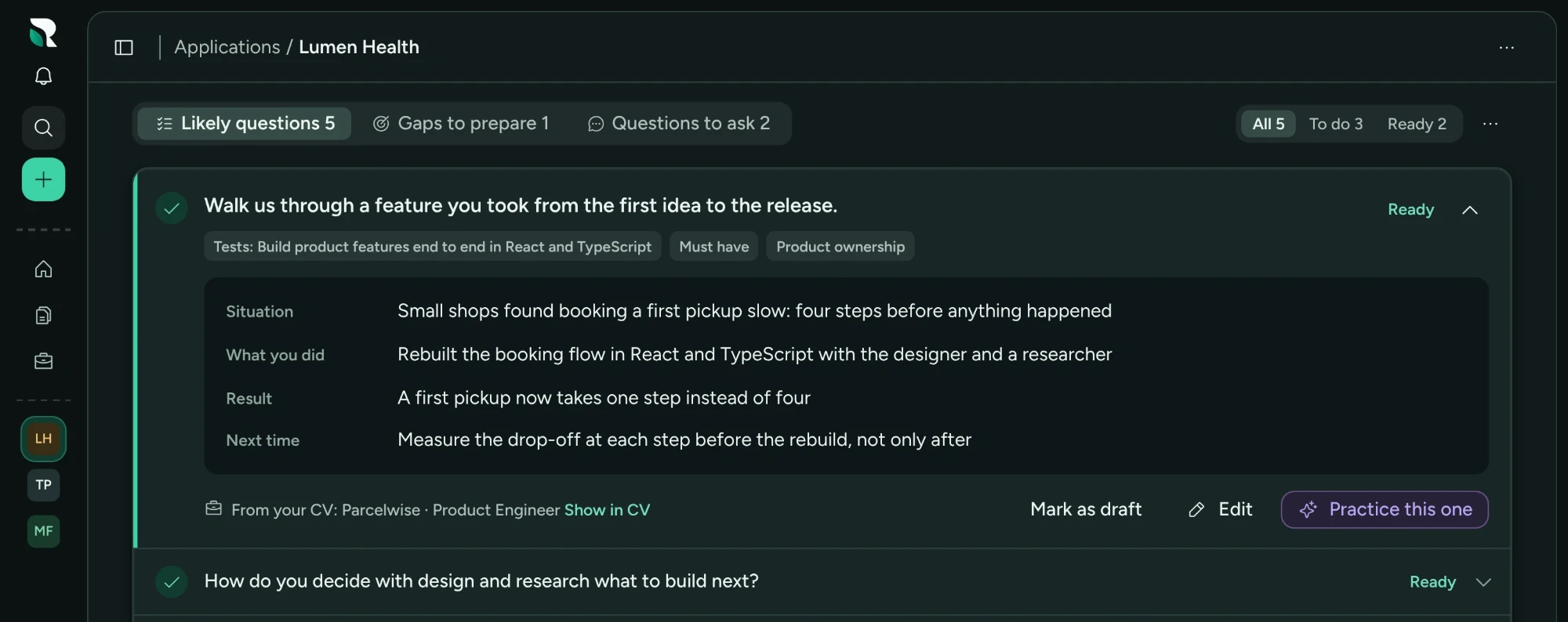
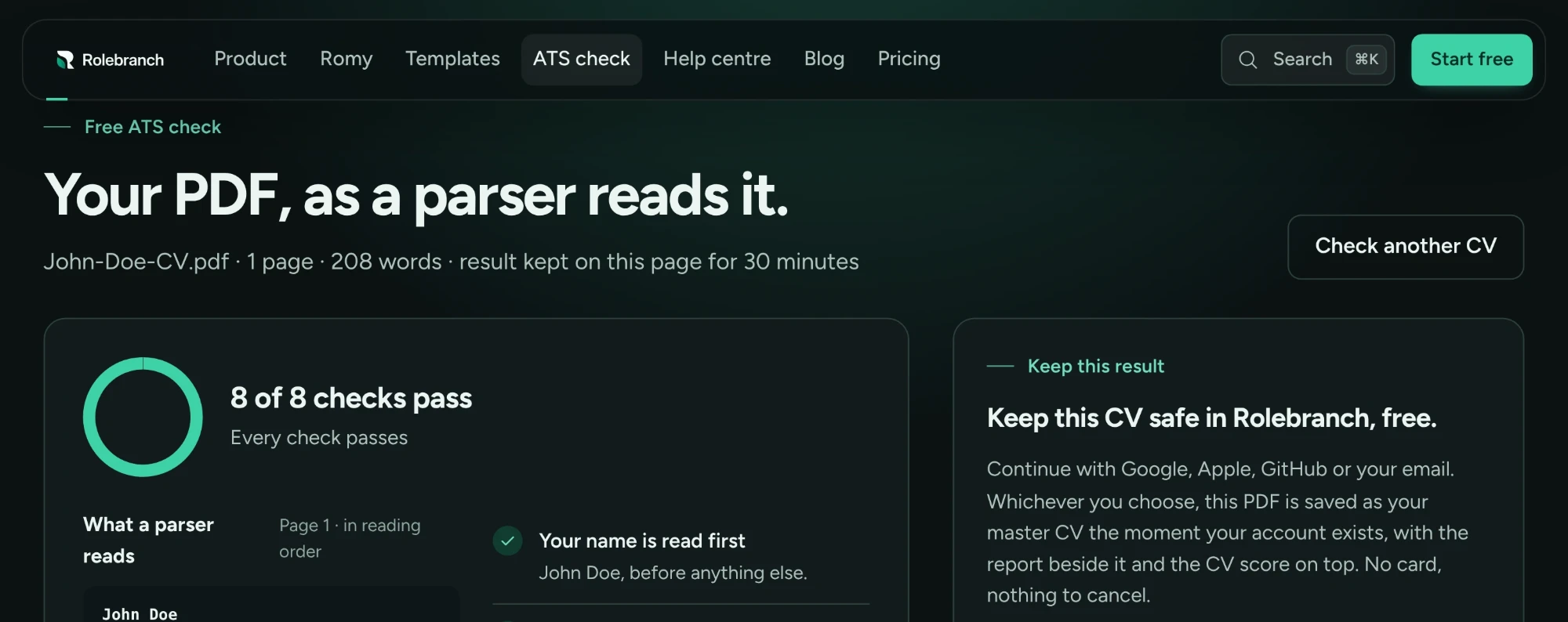
An application board, interview prep and practice from the posting, a free ATS check, ten templates and PDF export.
Inside your AI app.
Connect ChatGPT, Claude or Le Chat, and they can read your CVs and ask Romy for a tailored one.
03
Architecture
A TypeScript monorepo: two Next.js apps (the app and the public site) on shared packages for the GraphQL API, the database, the AI tasks, the PDF renderer and the help content. One GraphQL API serves the app, and the MCP server reuses the same commands, so a change from ChatGPT passes the same checks as one made in the app. Long AI jobs run as durable Vercel Workflows with retries. Data lives in Postgres in Frankfurt.
The app, the site and the AI apps reach Rolebranch through two doors, but both call the same commands, so every change gets the same checks and the same credit rules.
04
The hard parts
- 01
An AI that can’t quietly change your CV.
Romy never writes into your CV directly. She returns structured changes, which the app shows as a diff, and accepting one checks that the CV hasn’t changed since she read it. Where a result needs a number she doesn’t have, she leaves a blank instead of inventing one.
- 02
Paying for AI fairly.
Every AI action costs credits, so each run reserves its price first and settles when it finishes. A failed run gives the credits back. Bigger jobs show their price before they start, and a retried request can’t be charged twice.
- 03
Letting other AI apps in safely.
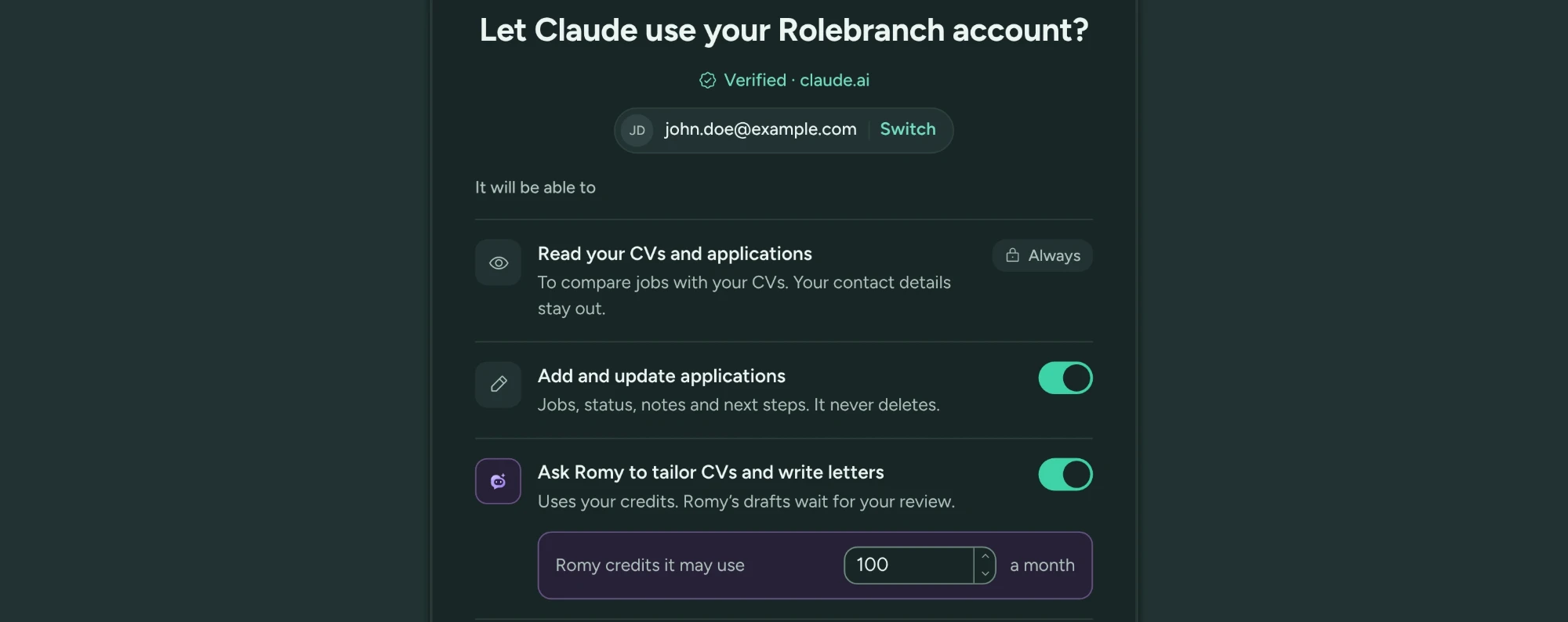
The connector is an MCP server with sixteen tools, behind OAuth and a consent page. Five scopes limit what each app can do, and each connection has its own monthly credit limit. No tool can send anything to an employer or accept a change on your behalf.
- 04
Six languages, done properly.
The interface, help centre, blog, legal pages and emails all speak English, German, French, Spanish, Italian and Ukrainian. Each page has its own address in each language, so /de/blog/lebenslauf-an-stellenanzeige-anpassen rather than English words under /de/. Tests fail when a translation drifts from the English page’s structure.
- 05
Keeping it maintainable alone.
Lint rules cap files at 250 lines and enforce layers (app, screens, features, entities, shared). More than 4,400 automated tests run before every change, including one that turns each PDF template back into text to check that an ATS reads it in order. Errors go to Sentry, every request writes one structured log event, and a public status page reports each part of the system.
An AI that can be wrong has to be easy to check. A change you can read and undo is worth more than a fast, confident guess.
05
What I learned
Trust beats speed for AI features.
An AI that can be wrong has to be easy to check. A change you can read and undo, or a blank where a number belongs, is worth more than a fast, confident guess.
Background jobs fail in boring ways.
The worst outage wasn’t the AI. A framework upgrade quietly dropped a build step, and every job failed. Now every deploy checks for it, and a stuck run tells the user after 60 seconds instead of spinning.
Translation is product work.
Native addresses, local punctuation and local conventions (a French letter isn’t a German letter) matter as much as the words.
Small, enforced rules keep a solo codebase readable.
File and function limits plus layer rules meant the code stayed easy to change after hundreds of pull requests.
06
Results
Built from first commit to public beta in one month, in six languages. Rolebranch launches on Product Hunt on 3 November 2026.
26 September 2026
First commit, after a couple of months of putting the idea off.
October 2026
Live at rolebranch.com as a free beta, in six languages.
3 November 2026
Product Hunt launch.